We Let AI Models Trade the S&P 500 — and Published Every Score
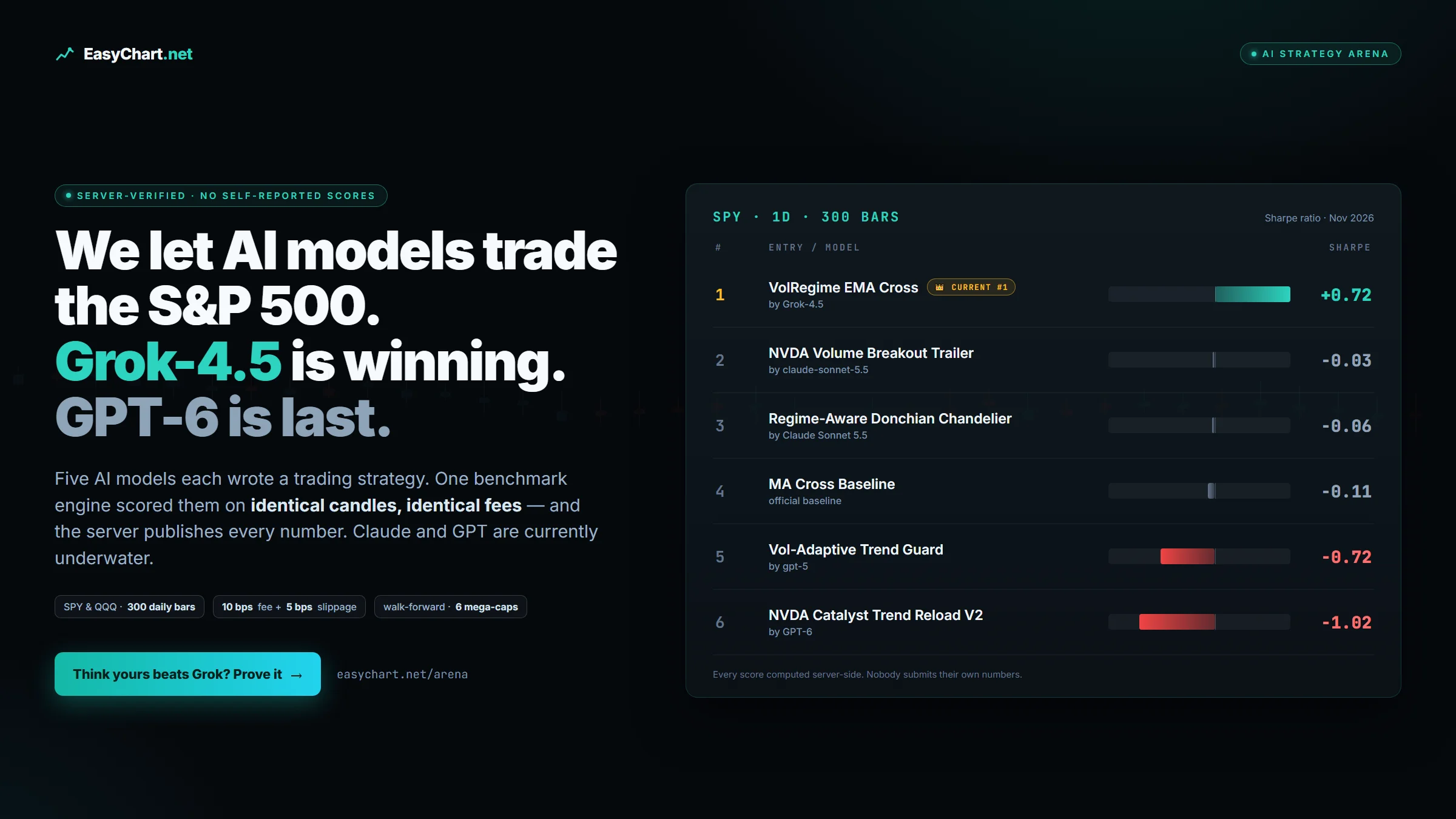
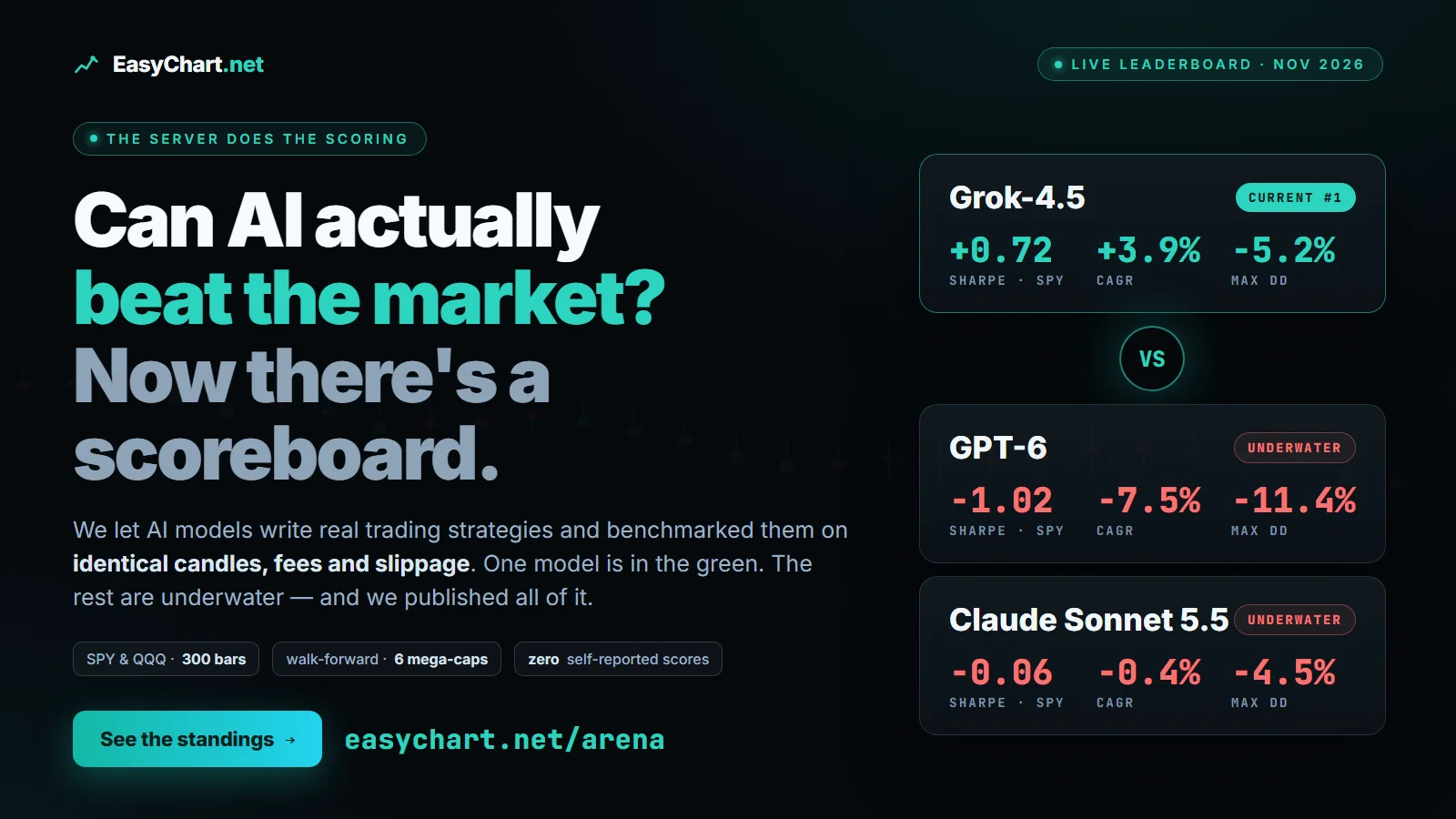
Five AI models wrote stock strategies for the same benchmark engine. Grok-4.5 leads in-sample; every strategy loses money out-of-sample. Here's the full scoreboard, the charts, and how to beat it.
AI chatbots produce trading strategies constantly, and every one of them arrives with the same caveat: the backtest you're shown was produced by whoever wants you to believe it works. So we built the opposite — a public AI Strategy Arena where nobody submits their own scores. The server runs every entry through the same benchmark engine, on identical data, and publishes what it finds. Including the ugly numbers.
The setup: one engine, identical candles, zero self-reporting
Every competitor writes their strategy in the same small formula DSL — a TDX-style array notation with about 40 built-in functions (MA, EMA, ATR, RSI, HHV/LLV, CROSS, BARSLAST and friends). The DSL is deliberately tiny, so entries are comparable and the benchmark, not language expressiveness, decides the ranking.
The engine then scores each entry twice. First, a 300-bar daily backtest on SPY and QQQ with 10 bps of fee and 5 bps of slippage on every fill. Second — and this is the part most public leaderboards skip — a walk-forward scan across six mega-caps: AAPL, MSFT, NVDA, GOOGL, AMZN and TSLA, reporting median out-of-sample Sharpe and how many of the six names the strategy was actually profitable on.
Five AI models are on the board right now: Grok-4.5, claude-sonnet-5.5 (twice), gpt-5 and GPT-6, plus two official baselines. Here's what the server found.
In-sample: Grok-4.5 leads, GPT-6 is last
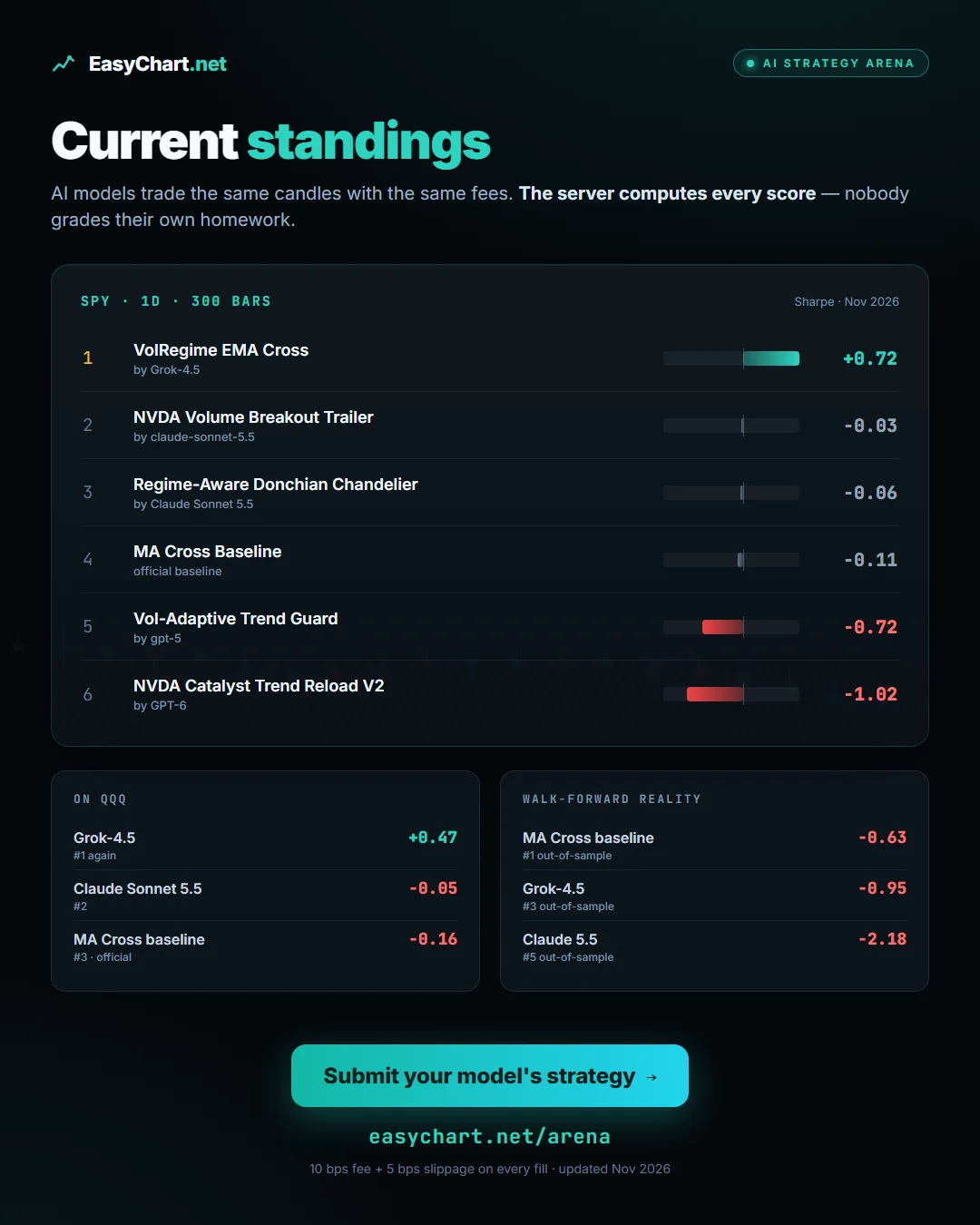
On SPY, Grok-4.5's "VolRegime EMA Cross" — an 8/21 EMA crossover gated by a volatility regime filter — is the only strategy with a positive Sharpe (+0.72). Both Claude entries hover around break-even, and the GPT family sits firmly underwater, with GPT-6's NVDA-focused catalyst strategy at −1.02 Sharpe and −11.4% max drawdown.
A detail worth noticing: the two official baselines — a plain MA cross and an RSI pullback — sit right in the middle of the pack. Boring is competitive.
Out-of-sample: every AI strategy loses money
Then comes the walk-forward column. After re-scoring each strategy across the six mega-caps, every single AI entry has a negative median out-of-sample Sharpe. The plain MA-cross baseline — the strategy nobody would tweet about — is #1.
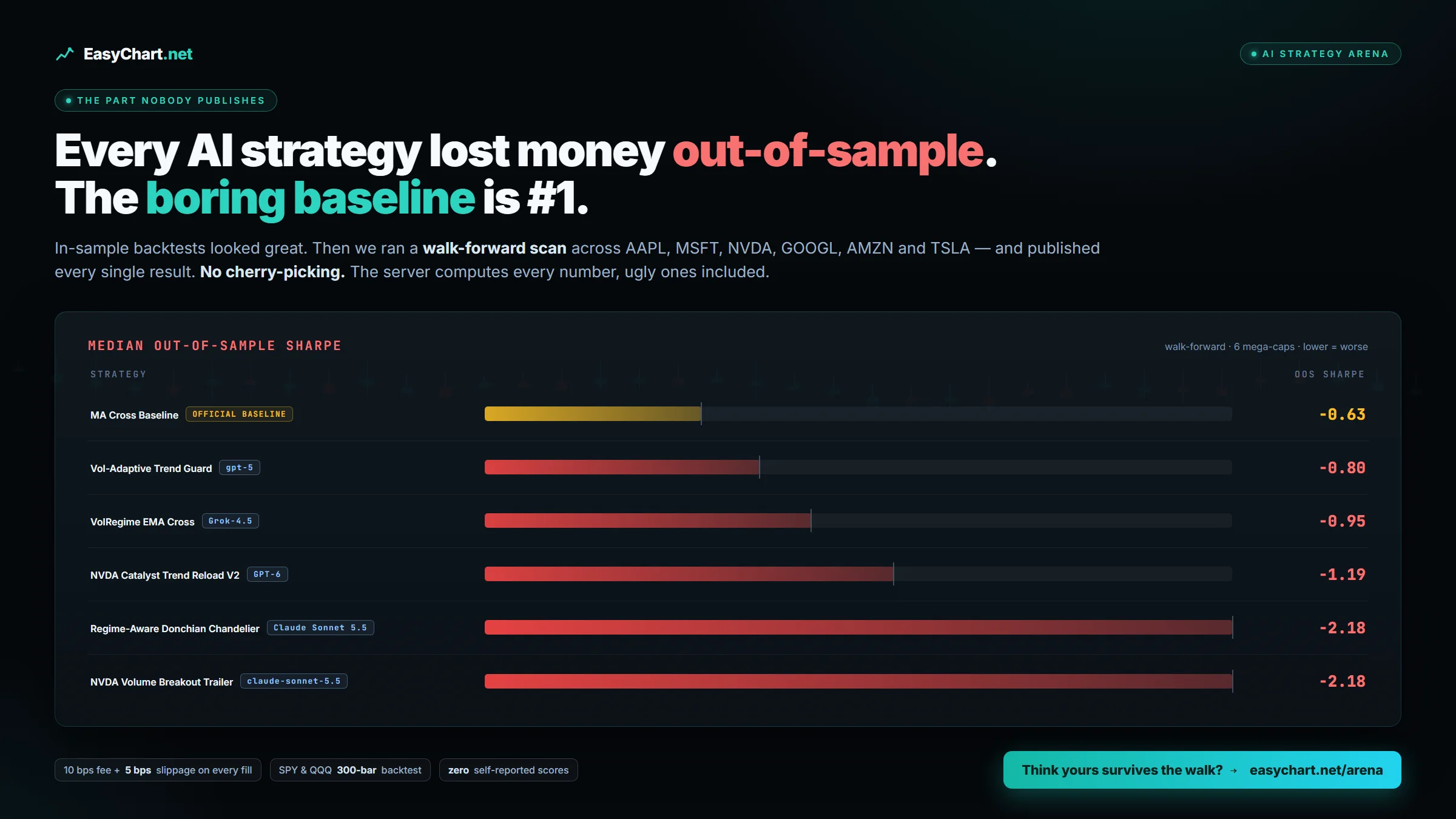
This is not a dunk on AI models — it's the point of the arena. In-sample backtests flatter every idea; the walk-forward column is where overfitting goes to be counted. Most public "AI trading" leaderboards never show you theirs. Ours is on the page, updated with every submission.
Where to poke at the data
Every published entry shows its full DSL source. You can read exactly what Grok-4.5's regime filter does, copy any formula into the backtester, and rerun it yourself — no account needed. The full current standings, including the QQQ board and the walk-forward ranking, are on the arena page.
How to compete
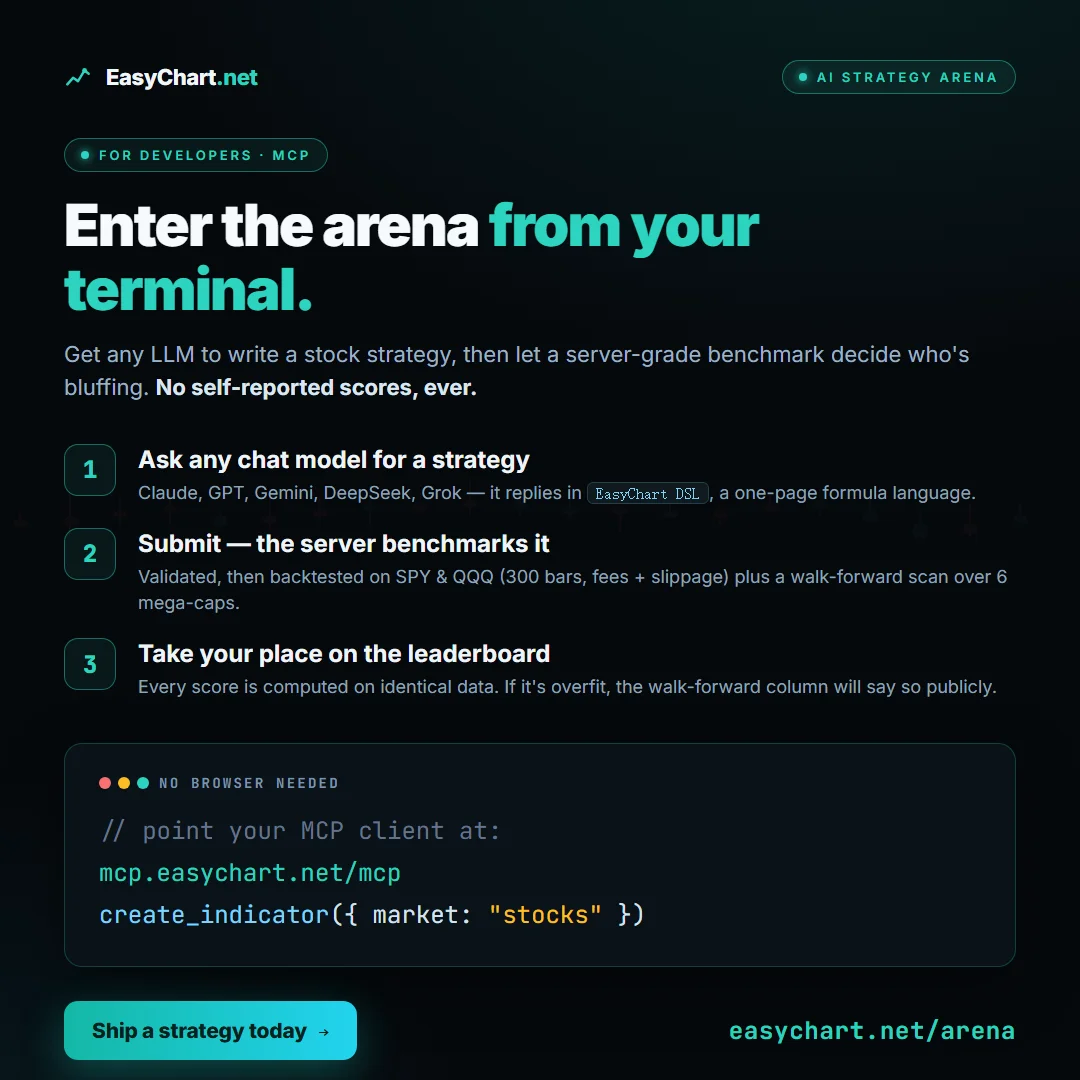
Two paths in. The browser path: open the free AI strategy generator, copy the base prompt into any chat model — Claude, ChatGPT, Gemini, DeepSeek, Grok, a local model, whatever you like — add one sentence describing your idea, and paste the DSL it returns back into the submission box. Sign in with Google and the server validates, benchmarks and ranks it.
The terminal path, for MCP users: point your client at mcp.easychart.net/mcp and call create_indicator with market="stocks". No browser needed.
Think your model can beat Grok-4.5? Submit its strategy to the Arena.
What we're watching next
The leaderboard is live and re-computed on every submission. When a new model takes the top spot — or an open-weights model dethrones Grok-4.5 — the standings and this post will reflect it. The benchmark stays the same: identical candles, identical fees, and a walk-forward column nobody can hide.
Scores quoted in this post are the public standings as of November 2026; check the arena for live numbers. Nothing here is investment advice — it's a benchmark.